Why applying Plant Empowerment principles in Mexico makes sense
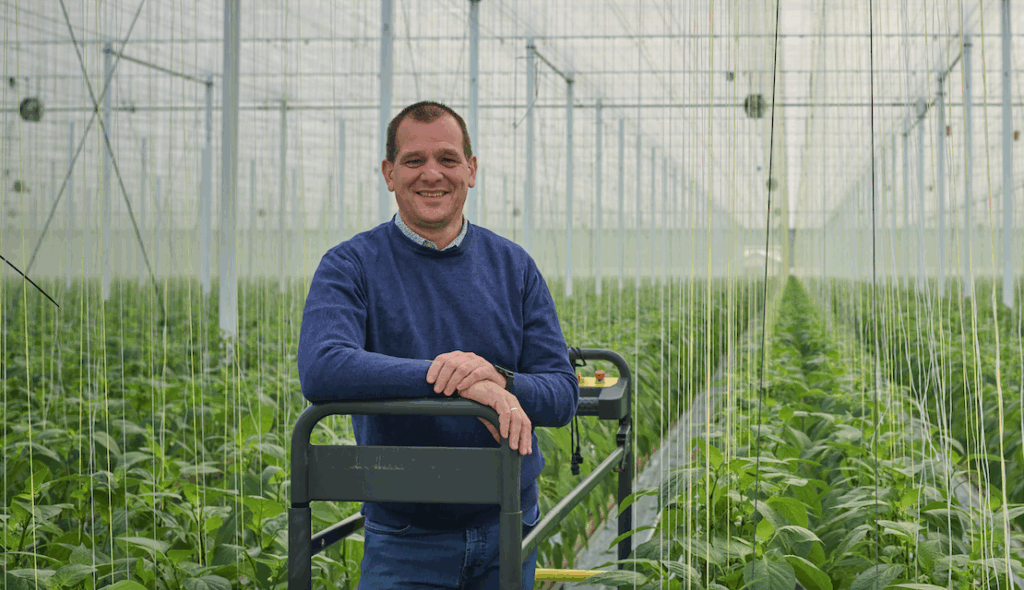
Pieter Mol is one of the believers of and fully behind the Plant Empowerment concept, a revolutionary idea that brings companies from across horticulture together to share knowledge and best practices for the benefit of all participants.
Currently an International Climate Consultant with Ludvig Svensson, Mol has spend his life in and around the horticulture sector. Born and brought up in the Westland region – the heart of the Netherlands’ greenhouse industry – Mol has lived and breathed horticulture since an early age.
After a lengthy career with a number of leading horticulture companies, including Syngenta, where he headed quality programs in Mexico and Guatemala, Mol joined Svensson in 2016 to act as an international climate consultant for large-scale projects worldwide.
“Svensson was looking for someone who likes to travel,” he recalls. “I already travelled 50% of my time. Plus, the kids are grown up, so that’s not an issue, and I like challenges. Helping growers with challenges in the industry where I work is really my passion.”
As a consultant, Mol acts as an advisor for growers on projects where they need advice on locations, and the best equipment and screens to use. “These are the kinds of things we discussed with Pharis and his daughter, Paula, who is also very active in the horticulture business,” he says.
However, Mol emphasizes that his role goes beyond talking about screens, but rather focuses on the need to identify what he calls, “climate solutions.” “Climate solutions are really the driver for the future,” he says. “Screens, of course, have a big influence on climate or light, but it’s even broader than that. If you have LED lights or a cooling system or misting, everything has an influence on crop performance.”
Even before he starts discussing screens with companies, Mol’s starting point is talking about the plant: examining the types of crops, whether soil is used, and other factors. All of this, he says, feeds into the concept of Plant Empowerment.
“As a group of companies, we spread the word, we share knowledge,” Mol explains. “In some countries, it’s strange that you would give knowledge away, but we say, ‘no,’ if you make each other stronger with knowledge, you can build and get to a higher level.
“And that’s the nice thing about this group of companies – we are complementary to one another, whether that be a supplier, a fertilizer company or a climate computer.”
Plant Empowerment also organizes a three-day summer school every June to coincide with the GreenTech horticulture trade exhibition in the Netherlands to teach delegates about the principles behind the concept.
Drawing on his considerable international experience, Mol says it’s clear the principles of the Plant Empowerment can be effectively adapted to all regions of the world, including Mexico, after taking into account differing ground and climatic conditions. “Each region and each crop needs a different approach, but with all of them, you need to take a close look to the local requirements,” he explains.
“So for example the need for shade and high grades of diffuse light is bringing a lots of benefits for Mexican growers. At night, the use of a screen can block the outgoing low wave radiation, which helps the plant head to cool down and reduces the risk of condensation issues. These are just a few examples and there are more for sure.”